Bitterroot

2023-11-30T18:15:04+00:00

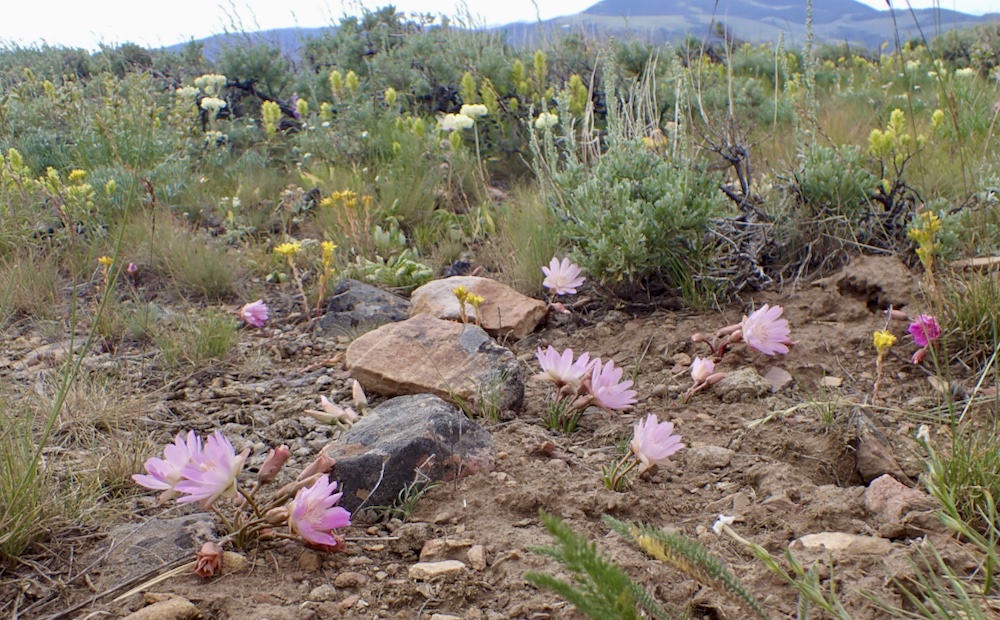
Bitterroot is harvested in spring and preserved for use as a winter pudding. The distinctive pink flower can be used on wounds to keep them from getting infected. It can be mixed with back fat or simply chewed and activated by saliva. A tea made from the stem can promote memory – especially after a head injury.

The plant was used extensively by the Crow but is amongst those that, according to Grant, are increasingly harder to find.
Bitterroot2023-11-30T18:15:04+00:00

Yampah

2023-10-17T00:05:44+00:00

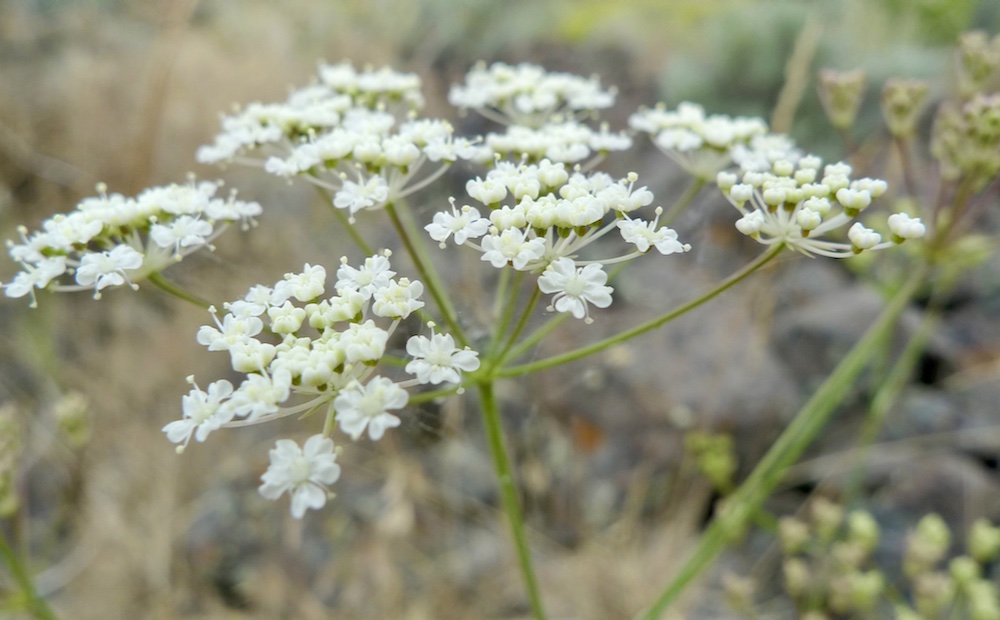
First reported outside Indian country by Lewis and Clark, yampah is a small wild carrot. Usually eaten raw as opposed to being preserved, It could also be mixed with ‘wild rhubarb” to make a kind of pudding. A favorite of bears, especially grizzly bears, it is common throughout the Greater Yellowstone Region.

Yampah2023-10-17T00:05:44+00:00

Big Sagebrush

2026-02-06T05:15:55+00:00

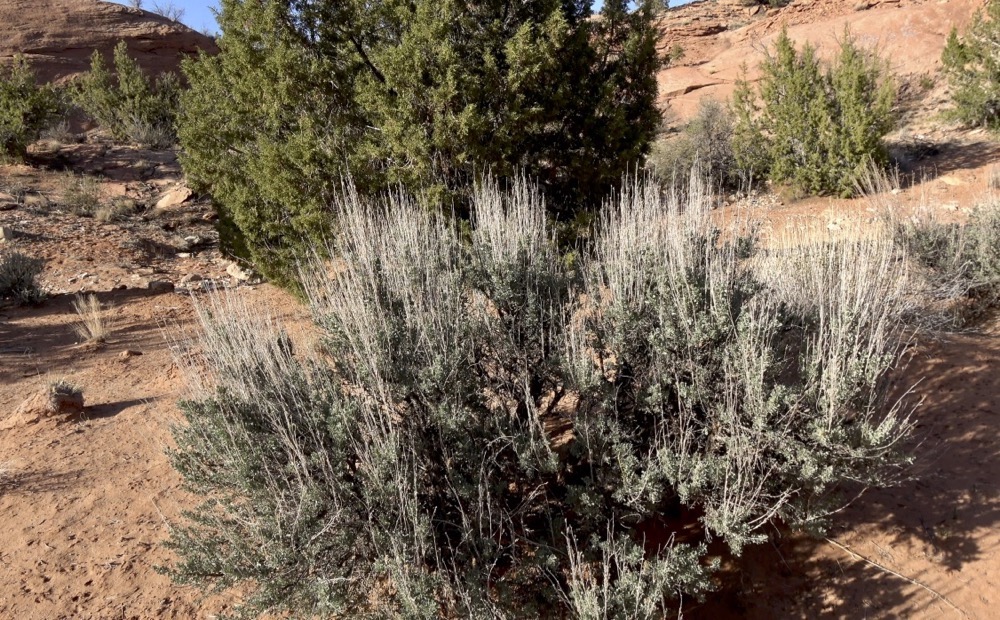
Big Sagebrush (Artemisia tridentata) is a predominant shrub of the West and an important plant for both wildlife and Native peoples. It provids a protective habitat for elk and other wildlife when giving birth. Certain specimens of the big sagebrush species provide female elk with an oil essential for to the birthing process.

There are three subspecies of big sagebrush each with their unique benefits for wildlife and chemical qualities which make them important traditional medicinal plants.

According to Navajo geobotanist Arnold Clifford, the leaves of Big Sagebrush are boiled to use as an inhalant or drank as a tea to treat colds. It can be used as a dye plant giving a greenish-grey color. It is also very good as a food for sheep and goats, imparting a unique sage flavor to the meat.

Bundles of another species of sage are burned as a smug used as a blessing and an effective fumigant to disinfect your environment.

A subspecies of big sagebrush known as tree sage grows in pure blow sand, which is a deep sand dune. Tree sage was used by the Western Shoshone to make dresses from wide strips of its bark. While gathering some of this bark, John Mionczynski discusses this unique plant and its habitat.

Harvesting big sagebrush occurs once a year in the late spring/early summer. Darrah Goggles speaks of the importance of being spiritually rooted for this gathering. Plants are treated with respect and harvested through cuttings, leaving the roots intact. Only take what is needed and respect the spirit of each plant.  All plants have spirit and should be treated accordingly.

Big Sagebrush2026-02-06T05:15:55+00:00

Datura Legend

2020-04-28T19:21:48+00:00

Datura (aka sacred datura, jimsonweed, devil’s weed, thorn-apple, stramonium) (Potato family – Solanaceae) (Datura stramonium)

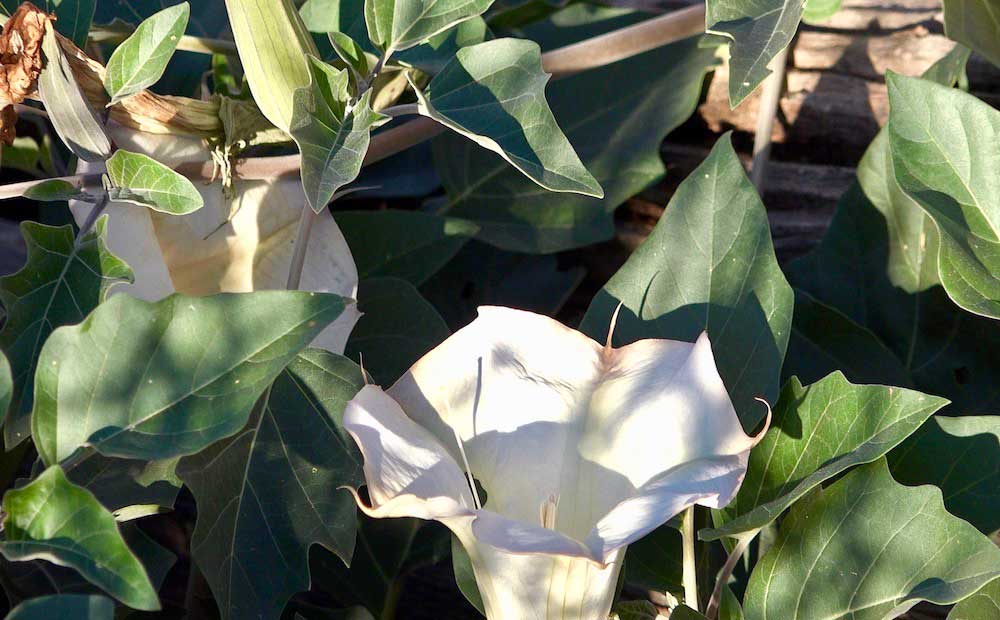
A very large poisonous plant that looks like it belongs in a tropical rain forest. Datura rises 2 or 3 feet from the barren desert floor with gigantic leaves sometimes a foot long that are dark green and noxious smelling, accompanied by gorgeous light purple, broadly flaring, 5 petaled trumpet flowers that smell heavenly! The fruit is a brown sphere the size of a golf ball covered with threateningly sharp spines.

The toxic alkaloids in the entire plant can kill you, but you will go crazy first. So . . . this is one you never take internally.

Traditionally it was used as a poultice for arthritic pain or muscle soreness and smudged or smoked to alleviate bronchial spasms of asthma and make breathing easier, or to treat a runny nose.

Holy men and women used this plant in very strict ritualistic procedures along with other plants to achieve altered states. Some in the counterculture have tried it to get high – only to get sick and disoriented. It doesn’t work that way!

Note: The alternate name ‘Jimsonweed’ derives from ‘Jamestown weed’, the name given to a species of Datura boiled by soldiers during Bacon’s Rebellion in 1676 in Jamestown, Virginia. The men were said to be in a “frantic condition” for several days.

Datura Legend2020-04-28T19:21:48+00:00

Rubber Rabbitbrush

2020-08-05T22:18:47+00:00

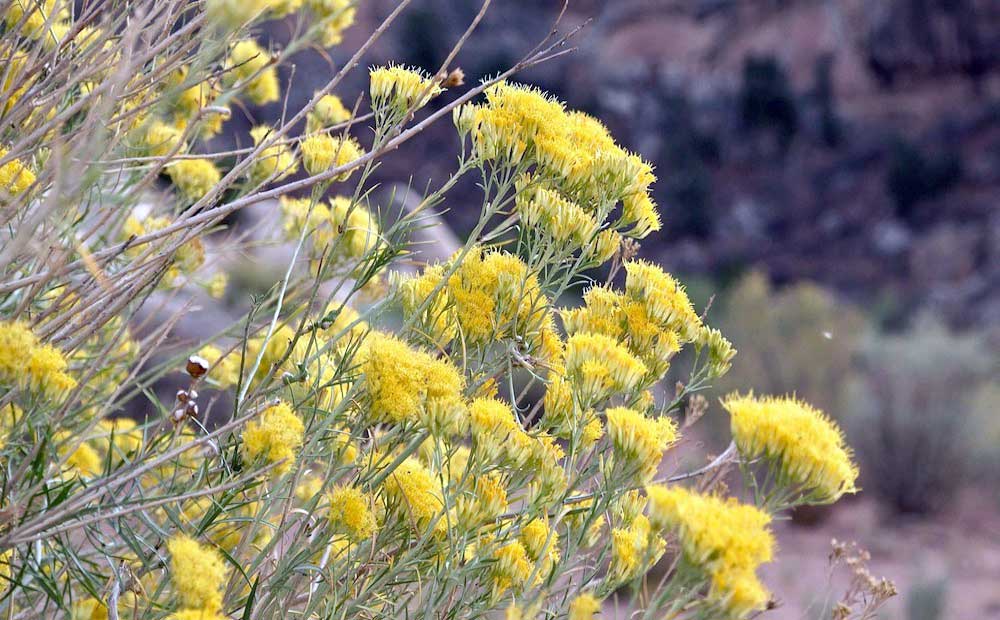
Rubber Rabbitbrush (aka chamiso) (Chrysothamnus nauseosus, recently renamed Ericameria nauseosa) (Asteraceae, sunflower family)

This plant has three traditional uses.

The bright yellow flowers, which lure in a myriad of pollinator bugs in the fall, were used to make a yellow dye for clothing and crafts.

Boiled in water, the dried leaves and flowers were used by some tribes to soak arthritic joints to relieve pain and swelling.

Ceremonially, this species is considered potent medicine to treat someone who has been attacked or possessed by an unwanted spirit. Shoshone tradition uses it in this way to treat nightmares.

Note: many tribal members familiar with its ceremonial use will not speak of rabbitbrush to white people. Apparently, it can backfire and make things worse if used improperly.

Rubber Rabbitbrush2020-08-05T22:18:47+00:00

Juniper

2020-08-05T22:31:16+00:00

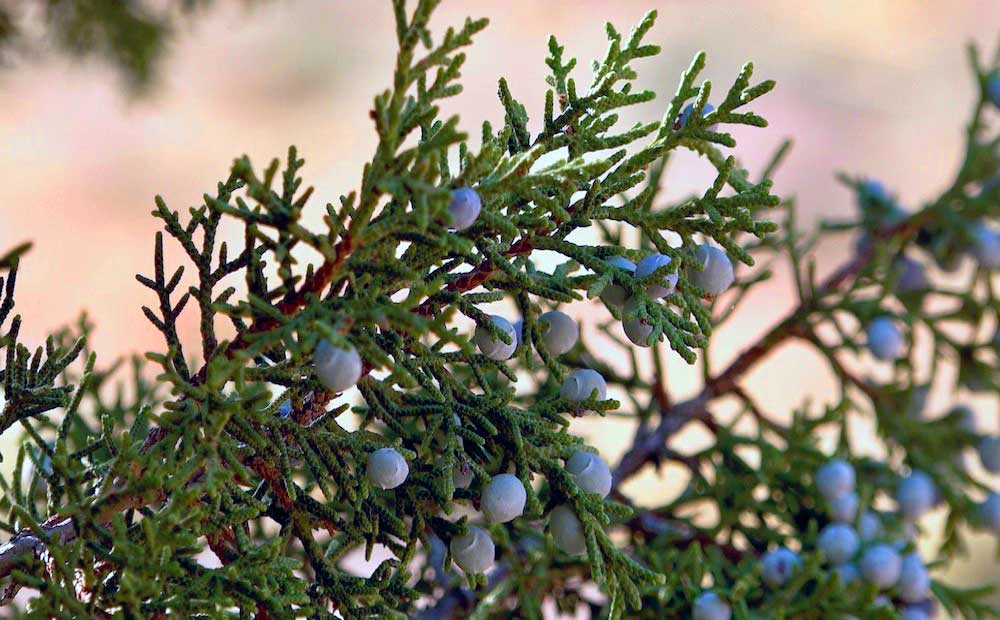
The many species of junipers fall into two major categories: the tree junipers and the low growing or creeping junipers. They are all similar in the way they are used. Tree junipers can grow up to 30 feet tall and create huge juniper forests, especially in Colorado, New Mexico, Utah and Nevada. Creeping (aka ground) junipers generally stay below 2 to 3 feet and spread out horizontally at higher elevations under mountain pine and fir forests. They all produce succulent berry-like cones that turn from green to blue as they mature. They are dioecious plants meaning males and females are on different plants and only females produce ‘berries’.

It is widely known that types of juniper are used by indigenous people for ceremonial purposes all over North American, to purify body, mind and spirit. It is less well known that juniper (often incorrectly, but commonly, called cedar) is also used as an important medicinal plant. A tea made from the berries is used primarily to treat urinary tract (kidneys, bladder, urethra, etc. ) infections, it is also given to the sick and elderly to promote appetite. The ‘berries’ are known to stimulate hydrochloric acid and peptic enzymes when chewed just before eating, which makes you hungry. In ancient times they were used as a contraceptive.

One species (one-seeded juniper) was an important food, the seed inside the berry being high in protein. The berries of creeping juniper were used as a spice on meat, and today people use them to make gin. 

Juniper2020-08-05T22:31:16+00:00

Ceremonial Juniper

2020-08-05T22:29:36+00:00

Ceremonially, several juniper species are used to purify and protect. Rocky Mountain juniper (j. scopulorum) is the preferred species to smudge people before ceremonies or handling sacred objects. The smoke from a smoldering branch is wafted or rubbed all over the body to purify and protect a person from unseen negative energies or entities. A twig or branch is often placed above a door or window to keep away bad spirits.

A spiritual leader will often stand on a mat of creeping juniper while performing ceremonies, such as the Crow pipe ceremony, as a protective layer between his feet and the ground.

There are many relatives of these junipers throughout the world. It is interesting that wherever they occur, indigenous people use them in a similar way. In Asia, Europe, or Africa, as in the Americas, they are considered sacred, associated with purification, protection and longevity.

Ceremonial Juniper2020-08-05T22:29:36+00:00

Globemallow

2020-08-05T22:32:47+00:00

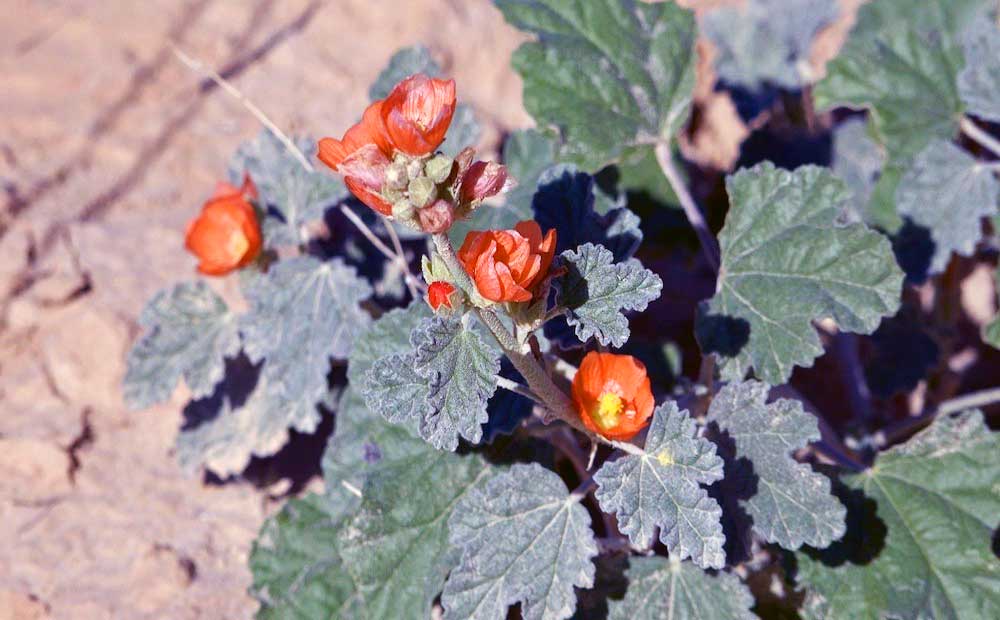
A strikingly pretty flower with 5 bright orange petals, globemallows occur commonly in arid lowlands from deserts to sagebrush steppes and even into the foothills of the mountains. There are 10 or 12 common species. Some are small herbs with 2 or 3 flowers on a plant, while others are bushy, 3 feet tall and 3 feet across with 20 to 40 flowers on a plant. The flowers all look the same and the plants are all used in the same manner as a healing medicine.

From Mexico to Canada native people used the leaves, stems and flowers for healing salves to sooth and speed up healing of abrasions, punctures and burns including sunburn.  When crushed in hot water the gooey polysaccharides in the leaf and stem tissues cause the collagen in skin to heal quickly and also triggers an immune response to clean up the wound and prevent infections.

It is also used to make a tea, which was taken internally to stimulate healing of mucous membranes of the intestines, stomach, lungs and kidneys. It is still used today as a sore throat medicine and bronchial decongestant. 

Notes: Hollyhock, a close European relative of golbemallow, now grown as a garden flower, was imported into this country as a medicinal plant for the same medical uses.

Globemallow2020-08-05T22:32:47+00:00

Datura

2020-08-05T22:34:13+00:00

Datura (aka sacred datura, jimsonweed, devil’s weed, thorn-apple, stramonium) (Potato family – Solanaceae) (Datura stramonium)

A very large poisonous plant that looks like it belongs in a tropical rain forest. Datura rises 2 or 3 feet from the barren desert floor with gigantic leaves sometimes a foot long that are dark green and noxious smelling, accompanied by gorgeous light purple, broadly flaring, 5 petaled trumpet flowers that smell heavenly! The fruit is a brown sphere the size of a golf ball covered with threateningly sharp spines.

The toxic alkaloids in the entire plant can kill you, but you will go crazy first. So . . . this is one you never take internally.

Traditionally it was used as a poultice for arthritic pain or muscle soreness and smudged or smoked to alleviate bronchial spasms of asthma and make breathing easier, or to treat a runny nose.

Holy men and women used this plant in very strict ritualistic procedures along with other plants to achieve altered states. Some in the counterculture have tried it to get high – only to get sick and disoriented. It doesn’t work that way!

Note: The alternate name ‘Jimsonweed’ derives from ‘Jamestown weed’, the name given to a species of Datura boiled by soldiers during Bacon’s Rebellion in 1676 in Jamestown, Virginia. The men were said to be in a “frantic condition” for several days.

Datura2020-08-05T22:34:13+00:00

Yellow Paintbrush

2023-10-17T21:41:08+00:00

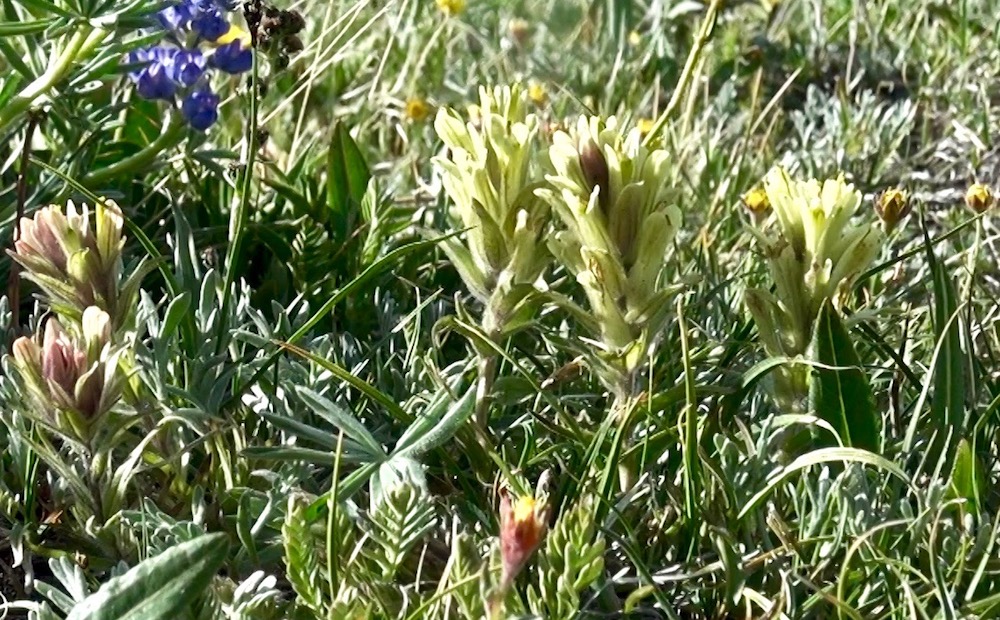
All the Paintbrush species have been used as a fresh mashed poultice applied to wounds to speed healing and stimulate an immune response.

Yellow Paintbrush has the same uses as Indian paintbrush except this one has the subtle flavor of mushrooms when fried or cooked with other foods.

In this next video, Grant Bulltail discusses more about how the Crow use Indian Paintbrush.

Yellow Paintbrush2023-10-17T21:41:08+00:00
Go to Top