Buffalo – Keystone Species

2021-06-17T23:12:50+00:00

Anatomy and Natural History

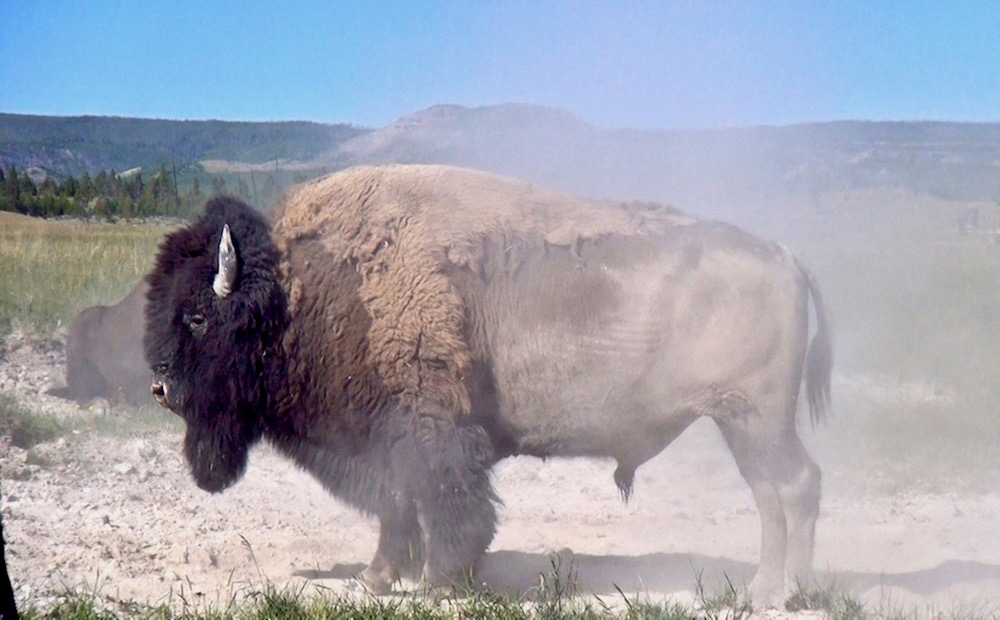
This is the largest of the North American ruminant species, adults reaching two thousand pounds. They once ranged from Mexico to Canada in the many millions and came dangerously close to extinction in the late 19th century, due to market hunting and wanton killing. Wyoming was the last refuge of these Pleistocene remnants, with the last free roaming herds occurring in the Red Desert and Yellowstone National Park in the mid 1880’s.  Estimates put the total population at 841.

They first appear in the fossil record around two million years ago and spread from Asia into North America over the Beringia land bridge about 300,000 years ago or more. The Steppe bison of Eurasia eventually evolved into four species of American bison, only one of which still exists. It is a close relative of the European bison (Bison bonasus) which went extinct in the wild many years ago but has been reintroduced from captive herds.

The term “buffalo” comes from the French trappers who called them Boeufs – referring to ox or bullock. Since “bison” is derived from the Greek, meaning “ox-like”, the term buffalo may not be that far off the mark. Either is considered correct, but only “bison” is considered biologically or technically correct.

Bison latifrons, the Giant Bison in the fossil record was thought to have evolved on the North American continent around 500,000 years ago and then became extinct around 25,000 years ago.

They evolved in an ancient time when animals were much larger, wolves, bears, beaver, and cats. Perhaps the Native people had seen and even hunted them before they disappeared during the great quaternary extinction event at the transition from Pleistocene to Holocene epoch which claimed the lives of many of the North American mega fauna of the time.

Native American

Petroglyphs and pictographs of bison occur in many places in Wyoming and throughout the American West. Native peoples prized the buffalo for its meat and its hide. After tribes adopted the horse (a pivotal point in their cultural history) buffalo became an even more reliable resource for most of their needs, as well as a focal point of Indian religion and ceremony. The destruction of the great herds of bison by market hunting, sport hunting, and military strategy in the late 1800’s, collectively helped undermine the culture, religion, and morale of the plains tribes whose horses allowed buffalo to be hunted as an infinite resource. Even so, hunting buffalo was not easy. It required bravery and skill. Early naturalists from the East described these giant hairy beasts as an unpredictable, dangerous, and savage animal that feared no other animal. They were considered more dangerous than the grizzly bear.

At the center of the ancient Shoshone Sun Dance ceremony is the forked cottonwood tree in the middle of the Sun Dance lodge; at the top of the Sun Dance pole is the head of the bull bison. To this day, it is at the center of many Native spiritual practices.

The bison appears in the center of the state flag of Wyoming.
Buffalo – Keystone Species2021-06-17T23:12:50+00:00

Wapiti

2021-06-17T23:11:18+00:00

Anatomy and Natural History

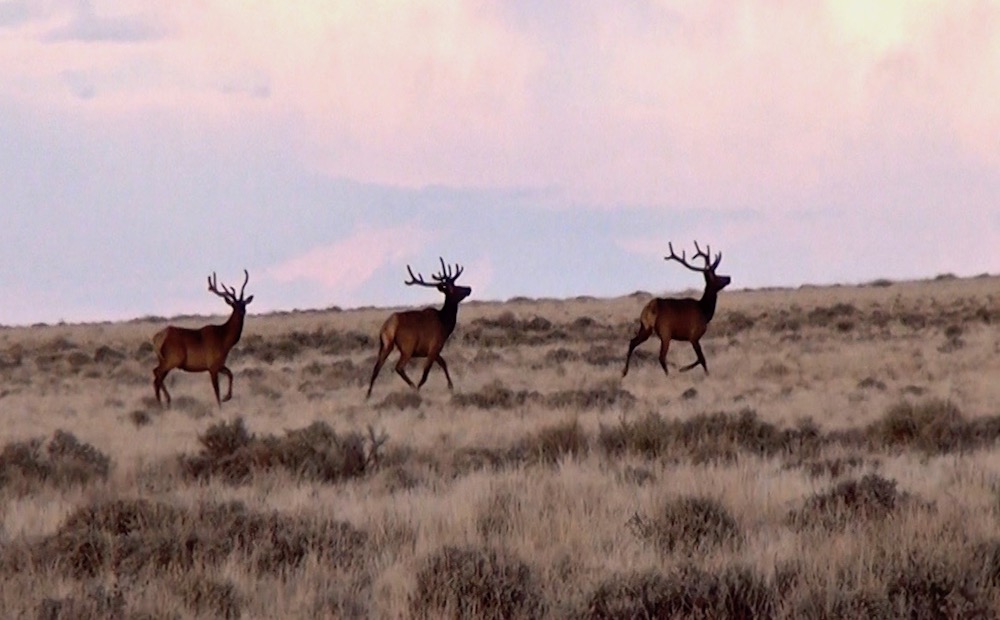
To many, the elk or wapiti is the iconic symbol of the wilderness. When one hears the bugle of this giant remnant of the Pleistocene in a forest meadow on a still, misty night, it resonates with some primal inner tuning fork that awakens the dormant instincts of our ancestors. No one who hears it is immune to the sudden need for awareness!

Like most large fauna in North America, elk have been misnamed. Early settlers believed the elk was an elg, elgr, or elech in European languages – which is what we call a moose. Although the term elk is accepted now, the more correct terminology is Wapiti, originally a Cree or Shawnee word meaning white rump.

One of the largest members of the deer family (Cervidae) in the world, elk are primarily grazers (grass eaters) that eat some forbs by preference but often resort to woody species, especially in winter when grass is hard to find. If trees in the Populus genus (aspen, cottonwood) occur in their range, elk will seek out the young sprouts in early summer and have demonstrated significant impact on the abundance of these species.

Native American

Native peoples often ascribed magical powers to this animal that can rapidly move 800 lbs. of muscle, flesh and bone through the forest without making a sound, massive antlers and all.

Elk provided many resources for native populations. The meat was highly valued. Hides were used for clothing, blankets, and resilient rawhide and leather for such things as horse saddles and straps for travois, etc. Antlers were used to make hunting bows, digging implements, and handles for tools. Antler tines were the tools most often used to peck in petroglyphs on sandstone rock faces.

Antlers were stacked on the treeless plains in columns taller than a man as trail markers that could be seen for miles

Wapiti2021-06-17T23:11:18+00:00

Bighorn Sheep

2021-06-17T23:10:15+00:00

Anatomy and Natural History

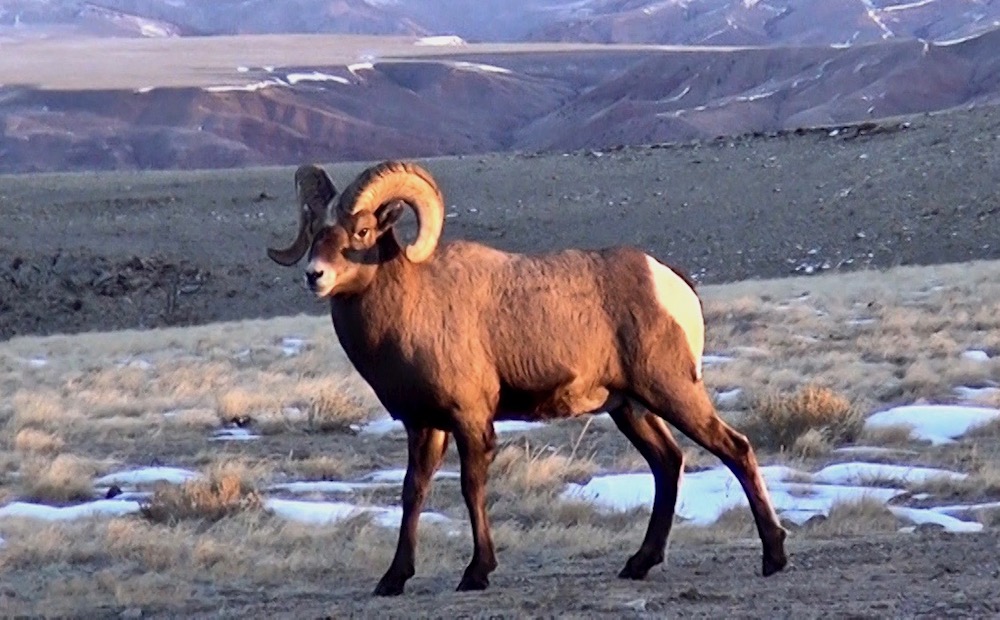
The majestic bighorn sheep is probably the first animal most people associate with the high mountains. A male bighorn (ram) can stand up to 41 inches tall at the shoulders (50 at the top of the horns) and weight up to 350 lbs. Due to sexual dimorphism, however, the female are less stocky and stand only 35 inches and weigh up to 188 lbs. with much smaller bones. There is great variation in size amongst wild sheep, and more typically males weigh 130-300 and females 80-180. Bighorn rams in the Sierra Nevada’s rarely exceed 200 lbs.

No matter the size, all bighorns are incredibly agile on the most difficult terrain. We associate bighorn sheep with jagged, snow and ice- encrusted granite peaks in the high mountains but prior to the staggering population declines of almost all wildlife during the period of ‘manifest destiny’ in the middle to late 1800’s, sheep occupied escarpments, buttes and rocky hills, as low as 2,000 feet, all over the Great Plains and deserts from Nebraska to California. Indiscriminate hunting and lack of immune response to domestic sheep diseases brought the wild herds down from millions to only a few thousand by 1900.

Lewis and Clark reported a great abundance of wild sheep which they often referred to as Argalia, thinking they were related to the Asian Argali Sheep which look very similar to bighorn. These sheep were named Audubon Sheep and were thought to be a different subspecies from the wild sheep they observed in the high Rockies. Recent DNA analysis of specimens killed around 1914 before their extinction from the Great Plains has confirmed they are the same species.

There are currently three recognized subspecies of bighorn, canadensis (Rocky Mt. bighorn), sierrae (California bighorn), and nelsoni (desert bighorn). These are found in Mexico, parts of Arizona, Nevada and southern California. Two populations are considered ‘endangered’ – O.c. sierra, and the Peninsular bighorn – a population of O.c. nelson found in Baja, California.

Bighorn sheep are one of two species of wild sheep in North America. The other species is Ovis dali and includes the Dall sheep and stone sheep, both referred to as ‘thin horn’ (rather than bighorn) sheep. These are indigenous to Alaska and Northern Canada. There is a 3rd species in Siberia called snow sheep (Ovis nivicola). All of these species primarily eat grass and forbs and occasionally shrubs.

During the Pleistocene (750,000 years ago) wild sheep crossed from Asia to North America over the Beringia Land Bridge and began to adapt and evolve into the forms we have now. Their occupation of the extreme rugged alpine terrain gave them a distinct advantage over most predatory animals. A good thing – since short-legged wild sheep cannot outrun any of their natural predators on flat ground.

Predators today include mountain lions, coyote, bear, and eagles They primarily feed on lambs which weigh 8-10 lbs. at birth and can walk hours after birth. Mothers will fiercely defend their lambs using horns and front hooves.

The dramatic clashing of the horns of wild sheep has become an iconic symbol of the western wilderness. This loud and powerful display of dominance is used by rams to assert their position in the pecking order. Once established, this rank will enable dominant males to maintain a “tending” area under their control. Mating “rights” are then claimed by one ram to the exclusion of younger, smaller rams. Rarely does a ram under seven years of age achieve such status, yet younger rams will continue to challenge dominant rams prior to actual mating, and this may lead to further horn clashes. To the extent that a ram defends his ewes against intruders, the ewes will show breeding preference to that one special ram. Once in season, the sound of clashing horns actually brings on estrus the physiological process wherein females become receptive to breeding.

Except for breeding season, ewes and rams lead very separate lives, almost like two different species. Rams are fond of loftier crags and rocky exposed prominences with a good view, while ewes may be miles away on grassy slopes and alpine meadows with their lambs – never far from the “escape terrain” of rocky and precipitous outcrops or cliff edges.

Breeding takes place in November or December on the winter range. Gestation takes 5 months. By May the herd is again separated into male and female bands in different spring ranges. Lambing takes place on specific lambing grounds, well worn by hundreds of years of untold generations of ewes using the same wallows carved in the alpine turf by the scraping of hooves to create low profile beds for their lambs to be born. These are communal activities for the ewes, as are the nursery bands which follow birthing, and are generally located very close to the lambing grounds. Nursery bands tend to be groups of 15 to 35 ewes with their lambs and represent extended families. Ewes take turns being babysitters – watching over lambs while the other ewes go away to the best feeding areas. There is generally a guardian ewe also, often a barren ewe, who sits on a high point and watches for a possible threat. Vocalizations, a head-held-high posture, and stomping of the front feet, alerts the others of danger looming!

Nursery areas are specific places used year after year by the same nursery bands where the topography provides a good view of the landscape, vegetation for food, available water, escape terrain and mineral licks. High mountain soils often produce mineral deficient food plants so that commonly ewes under the physiologic stress of producing a lamb plus lactating, will travel long distances every two weeks to eat soil high in trace minerals. (On mineral deficient summer ranges milk production can drop as much as 83% – resulting in smaller lambs with lowered immune response.)

The Whiskey Mountain herd located 60 miles east of Jackson Hole, Wyoming is the largest bighorn herd in the United States. Some of these sheep travel 11 miles over a very rugged landscape strewn with blown-down trees for a long section of the route, to eat soil at mineral licks at lower elevations. Most predation for this segment of the herd occurs along this dangerous route.

Sheep ranges in general are divided into three to five seasonal ranges: summer, fall, winter, spring, and lambing grounds. Winter ranges are usually the critical link in the chain. They must be big enough to provide food for the entire herd and be on sedimentary soil for a complete nutrient base for forage plants and/or have ample mineral licks nearby.

Winter ranges are often high ridges where wind can blow winter snows away leaving the short mountain grasses and forbs available. Sheep don’t like to push through deep snow to feed.

Although pronghorn and elk are famous for long marathon seasonal migrations (at least in the old days before settlement) of over 100 miles, bighorn sheep usually only migrate five to 15 miles between summer and winter ranges.

Native American

Many thousands of wild sheep died as the result of pneumonia and scabies infestation when domestic sheep were brought into the West in the mid to late 1800’s. They had virtually no resistance to these Asian and European diseases. In addition, the meat of bighorn was highly prized by early explorers and settlers. Later, big game trophy hunters came to exploit the massive heads of the rams. A ram’s set of horns can weight up to 30 lbs. Mountain sheep were pushed to the edge of extinction by the late 1890’s.

The hide was highly prized for its warmth by Native people in winter clothing. The Mountain Shoshone people depended on bighorn sheep for most of their clothing, shelter and food. They made wickiups covered with wild rye grass and sheep hides, wore clothing and moccasins with hair-in sheep hide, ate the meat of these sheep, and made sheep horn bows (the most powerful weapons before rifles came to the Indians.) They were so strongly tied to these animals that they were known as ‘Duka Dika’, or Sheep Eaters. All of this meant survival as well as valuable trade goods for these dwellers of the high country.

In the North Absoroka Range which forms the east boundary of Yellowstone National Park there is an archeological excavation called “mummy cave”. The mummy found deep in the ground of this cave is thought to have been a Duka Dika (mountain Shoshone) man who was carefully buried over a thousand years ago. High topped winter moccasins made of sheep hides with the hair in, were folded neatly by his side… an essential for life in the snowy mountains of Western Wyoming.

The Sheep Eaters built sheep traps out of dead-fall trees at high elevations, with long drive-line fences six to seven feet high. Often hundreds of yards long, they were designed to move the animals into the trap where they were clubbed at the back of the head and killed. Many of these traps and drive lines are still found in the mountains of this region, as are the dwellings called wickiups or conical timber lodges. Some of these are hundreds of years old and still standing!

The Apsaalooka or Crow people who once shared much of this territory with the Shoshone also held the bighorn in the highest esteem. A Crow storyteller named Old Coyote tells this story from the time when animals could talk: “Evil spirits possess a man who tries to do away with a rightful heir by shoving the youth off a cliff. The young man lands in a tree and is rescued by bighorn sheep. He takes the name of the chief of the sheep – Big Metal. Big Metal comes down from the Big Horn Mountains and gives his people a message: “The Apsaalooka people will surely survive as long as the great river flowing from the mountain is known as the Bighorn River.” Today, the Crow Reservation is located along the Bighorn River in South-Central Montana.

Bighorn Sheep2021-06-17T23:10:15+00:00

Antelope

2021-06-17T23:08:21+00:00

Anatomy and Natural History

Pronghorn antelope are also called speed goat, prong buck, or just antelope. This graceful speed demon of the sagebrush country is neither an antelope nor a goat. Yet its family name, Antilocapradae means goat-antilope. It resembles both goats and antelopes but actually predates both on the evolutionary timeline. Pronghorn are the fastest land mammal in North America. They can run steadily at 55 miles per hour for ½ mile but can run at a sustained speed of 35 mph until they disappear over the horizon. In the entire world, they are the second fastest land animal. The African cheetah is fastest but cannot run as far as the pronghorn at high speed. It is believed that the pronghorn became a “speed goat” as they are known in parts of Wyoming during their evolutionary development in the Miocene (20 million years ago) when the American cheetah (close relative of the African cheetah) would have given the young pronghorn a run for their money. Only the fastest survived. Today, they can outrun all their predators handily although unlike superman, they are NOT faster than a speeding bullet, and hundreds are hunted in Wyoming every year for their meat.

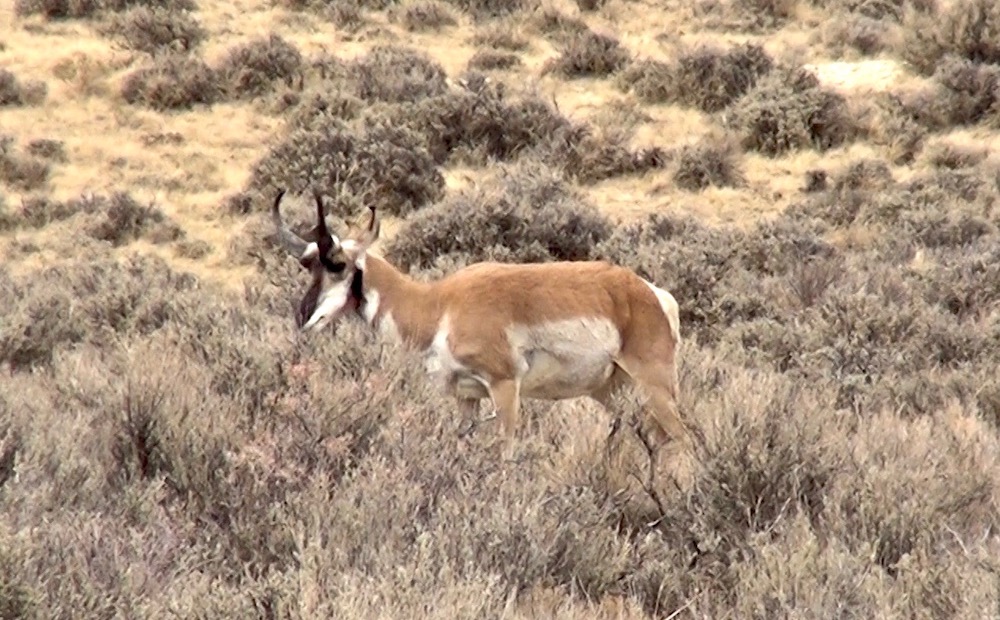
Horns are the most distinctive feature of pronghorn anatomy. They are used for dominance displays and ritualistic butting during the rut (mating season), and effectively used against predators such as coyotes and eagles. The horns are made of keratin (modified hair protein) which grows over permanent boney cores that are solid extensions of the top of the skull. Interestingly, the pronghorn is the only native horned animal in North America that sheds its horns and grows new ones every year. Horns are not the same as antler which are made entirely of bone tissue, and many members of the deer family (white tail, mule deer, moose, and elk) shed their antlers every year.

The horns of the pronghorn are very unlike the horns of the bovids (cattle, bison etc.) caprids (goats, mountain goats, musk ox, etc.) or the true antelope (gazelles, kudu, sables, etc.). The branched horn sheath is made of a fairly standard curved trunk but the pointing branch is shorter and curved upward with a fairly sharp tip, giving it the name ‘prong’ horn.

Pronghorn also differ from deer in that they have a gall bladder and deer do not. And unlike other ungulates, pronghorns lack dew claws which are vestigial (non-functional) toes that do not touch the ground.
Pronghorn bucks have scent glands on the sides of the head and can be seen marking their territory by rubbing their heads and horns on sagebrush or small trees. Since both males and females can have horns and both lose their horns in early winter, males are distinguished from females by a black patch of hair on both sides of the neck behind the jaw bone. Female horns are much smaller than males at 5-6 inches long (compare to males at 10-17 inches), and the females only rarely have a prong.

The scientific community first became aware of the pronghorn through the journals of Lewis and Clark who made notes on the strange new animal of the Great Plains in what is now South Dakota in 1804.

The pronghorn, more closely related to the mountain goat, is more gracile and streamlined in form and function than the members of the deer family. Weighing in at about 120 lbs. for a male and 90 to 100 lbs. for a female, these are the smallest ruminant ungulates in the U.S. Not only that, they are the only mature native ruminants still living in North America. Deer, elk, moose, and mountain goats arrived in North America from Asia prior to the last ice age. Of the 12 species of goat antelopes that were native to North America prior to the ice age, only the pronghorn survived to modern times (although there were five goat antelopes species around when Native Americans took up residence).

We have fossil evidence of the pronghorn in the early Miocene epoch. It first appeared in geologic time over 20 million years ago as a small (raccoon-sized) frugivorous (fruit-eating animal). Over time and due to competition with a rapidly radiating spectrum of mammal life in the world, the pronghorn became larger and more efficient. It developed an enlargement in its digestive system (rumen) before the stomach allowing it to slow down the passage time in the gut, and expose food to a bath of enzymes created by microorganisms. This vastly increased its range of digestible food sources. Fermenting food in the rumen allowed this pioneering mammal of the Miocene to digest weedy and even poisonous plants with less waste – using a greater range of habitats – including the hostile deserts and steppes of arid continental interiors. The idea caught on. The Ruminantia subfamily of mammals (the “ruminants”) radiated throughout the world to include the deer, antelopes, goats, mountain goats, cattle and bison of Europe, Africa, Asia and the Americas.

Pronghorn have an unusually raised set of eye sockets providing them with a 320-degree peripheral vision without having to turn the head. Combine that with a visual acuity equivalent to wearing a pair of 7x binoculars and very little escapes the attention of this species.

Ecology

Pronghorn are supremely adapted to harsh dry habitats, particularly scrub deserts and sagebrush steppes where grass and water can be scarce, often though they expand into the foothills and montane zones of Wyoming’s mountain ranges. The broad spectrum of their dietary preferences allows for survival in a wide variety of habitats as well as during times of drought and climate change. In some habitats, forbs (herbaceous plants – not grasses) make up more than 60% of the diet. In others, rabbitbrush makes up the bulk of the diet. In still others, cacti can be as much as 40%. On the eastern grasslands, much more grass is utilized.

Behavior

Males are generally territorial. Most females will prefer to play the role of “sampler female” who visits various males in their local territories. As estrus season gets closer to mid- September when breeding occurs, “inciting females” instigate battles between males. After days of head butting, chasing, horn displays etc., the females choose the winner.

Although sexually mature at 16 months, most bucks won’t breed until their 3rd or 4th year. Gestation is long: 235 days, well over a month longer than most ungulate wildlife. The does carry the fawn from September to May, similar to the human gestation period.

A newborn fawn weighs 6-7 lbs. and for the first 21-26 days spends almost all its time hidden under sagebrush, bitterbrush or tall grass. Fawns interact with their mother for suckling, grooming or following for less than 30 minutes a day. Mother pronghorn are notorious protectors, attacking coyotes, lions, even eagles that get too close.

Native American

Most tribes valued pronghorn for their rich meat and soft hide. However, some Crow elders have said it was not eaten much because of the strong taste.

The old Shoshone name for the valley in which Lander, Wyoming now lies is WONSA GADIT – “where the buck antelope sits”.

Antelope2021-06-17T23:08:21+00:00

Wild Horses

2024-08-31T23:28:17+00:00

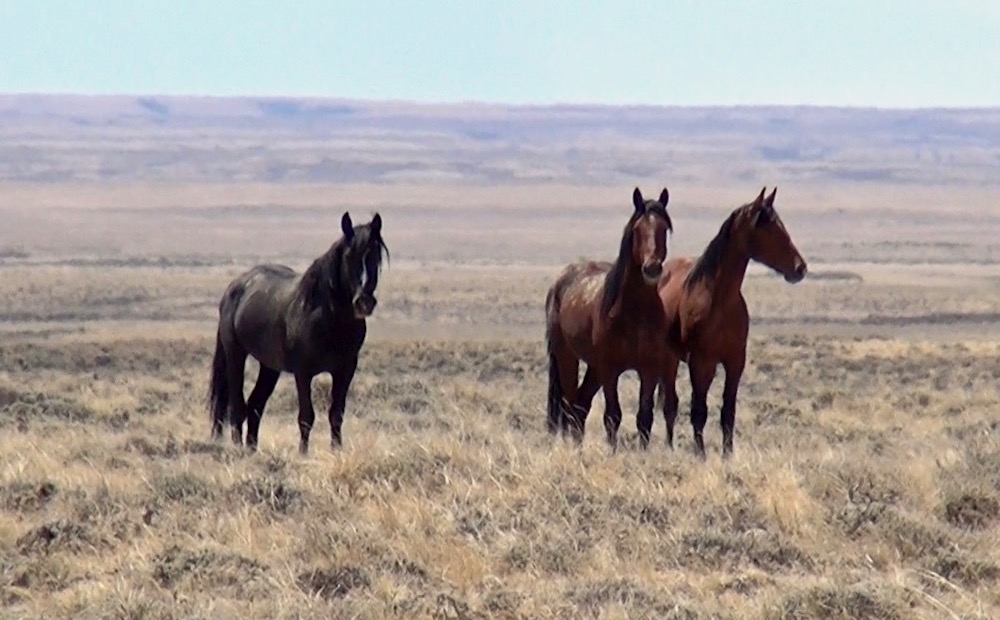
A young Crow named Bishéesh fasted on one of the Teton peaks where he had a vision of horses. This lead him on a 7-year trek to the south, from which he returned with the first horses. In honor of this feat, the Crow call the Tetons Bishéesh iilápxe, or Bishéesh’s father.

Wild Horses2024-08-31T23:28:17+00:00
Go to Top