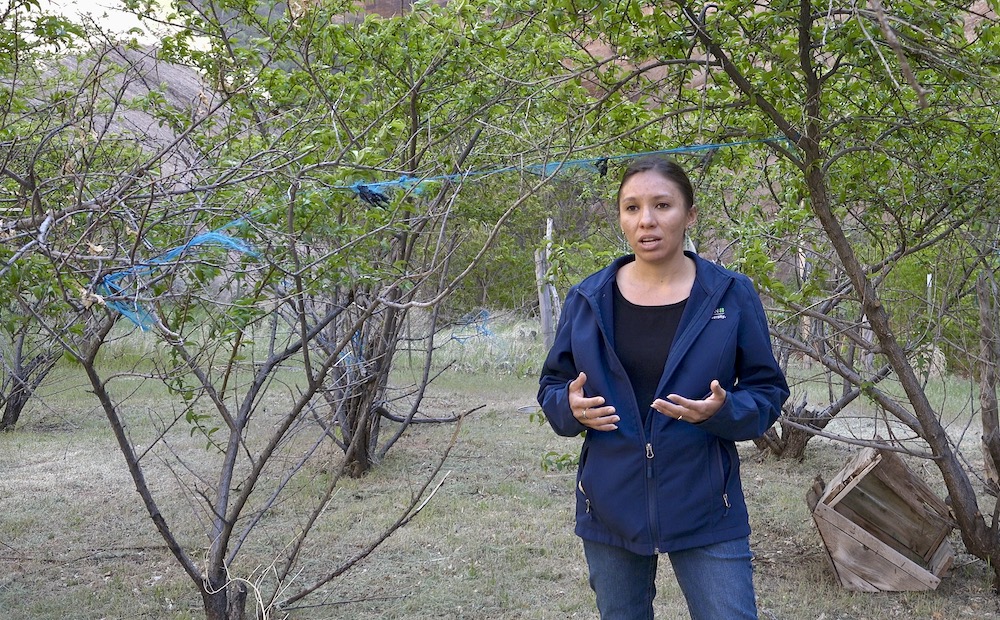
Navajo Peaches

2025-01-23T15:56:23+00:00

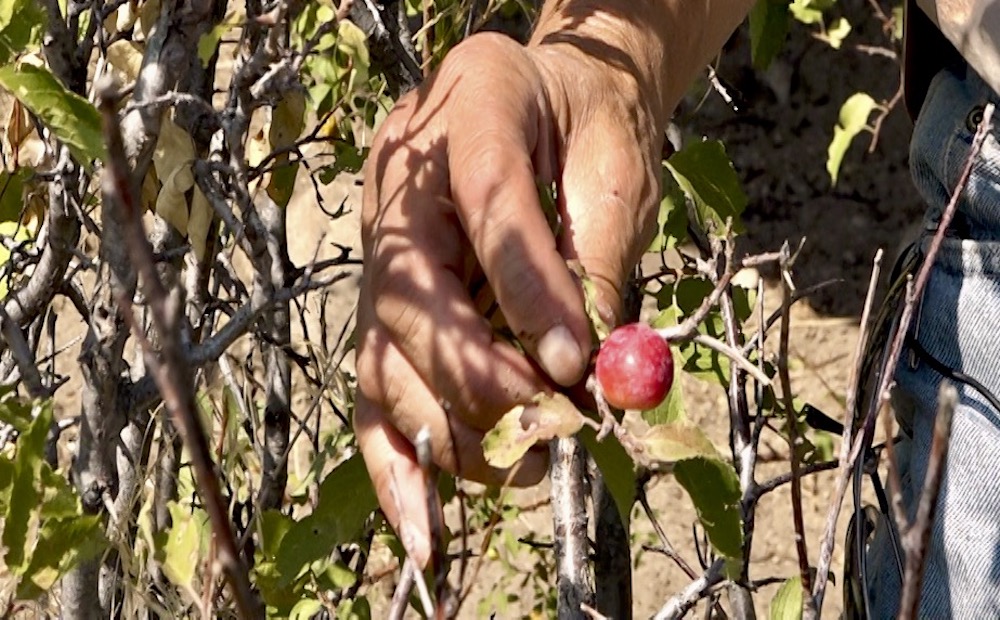
During the Long Walk, the US government attempted to eradicate both the Navajo people and their peaches from the Four Corners area. Despite these efforts, both persisted. Today Navajo botanist, Reagan Wytsalucy, works to restore native peaches to this area, as well as recording the stories and traditions of peach growing from tribal elders. While focusing on returning these peach trees to their historical abundance, Wytsalucy is also studying the benefits of traditional orchard natural growth practices.

For more information about Reagan Wytsalucy’s life and work with Navajo Peaches visit:

https://www.atlasobscura.com/articles/navajo-peaches

For more information about the Navajo’s expulsion from their homelands visit:

https://www.nps.gov/nr/travel/american_latino_heritage/canyon_de_chelly_national_monument.html

To hear about the variety and taste profile of various Navajo Peaches

To hear about how these trees are being repopulated and protected

To hear Reagan Wytsalucy’s family’s story
Navajo Peaches2025-01-23T15:56:23+00:00

American Wild Plum

2022-05-11T21:39:17+00:00

American Wild Plum – Prunus americana

The wild plum (or American wild plum) is more common in the Great Plains and Midwest but occurs sporadically in the Rockies (Alberta, Montana, Idaho & Wyoming). It prefers areas where soil moisture is higher such as deep canyons and along rock walls.

The fruit was highly prized by indigenous people for its flavor and texture, and large size compared to other wild fruits.

Like most other fruits in the rose family, the wild plum is full of antioxidants, which are largely responsible for its bright colors (yellow, pink & red) and essential for cardiovascular health and protection from illness. It is also rich in vitamin C as well as other nutrients.

In some areas it has hybridized (cross-pollinated) with non-native plums.

American Wild Plum2022-05-11T21:39:17+00:00

Stinging Nettle

2022-06-08T23:43:13+00:00

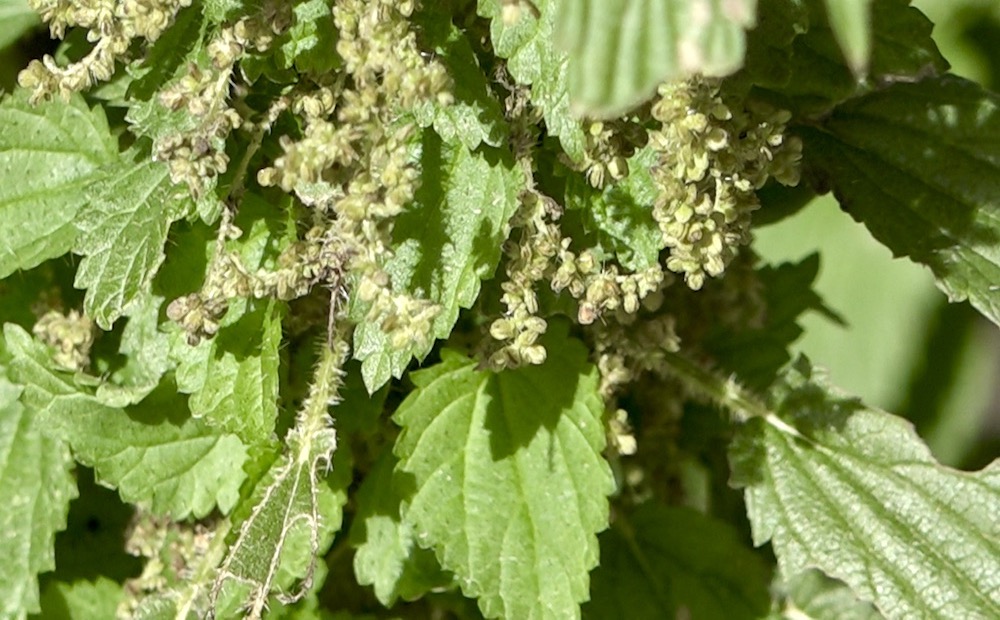
Stinging Nettle, Urtica dioica

One of the most revered plants in the world for its’ health-promoting attributes, stinging nettle is the perfect example of the concept of “food as medicine”.

The young leaves and stems, fresh or dried, are cooked in soups, stews, or stir fries to produce a tasty potherb rich in a broad array of nutrients essential for good health as well as replenishing a depleted liver and other organs following a prolonged illness.

The stinging part of the name refers to a separate medicinal function of the tiny, microscopic spines that inject you with formic acid (the same acid in bee stings) when you brush up against the plants.  In both European and Native American traditions these plants were whipped across the back or arms and legs of people suffering from arthritis to relieve the pain by stimulating a long-term hormonal response in the bloods similar to getting a cortisone shot.

A truly amazing plant!

In this next video, John Mionczynski discusses more about the many uses of stinging nettle.

Stinging Nettle2022-06-08T23:43:13+00:00

Green Ephedra

2021-06-17T20:00:58+00:00

Also known as Green Stem tea, Mormon tea, Brigham Tea.

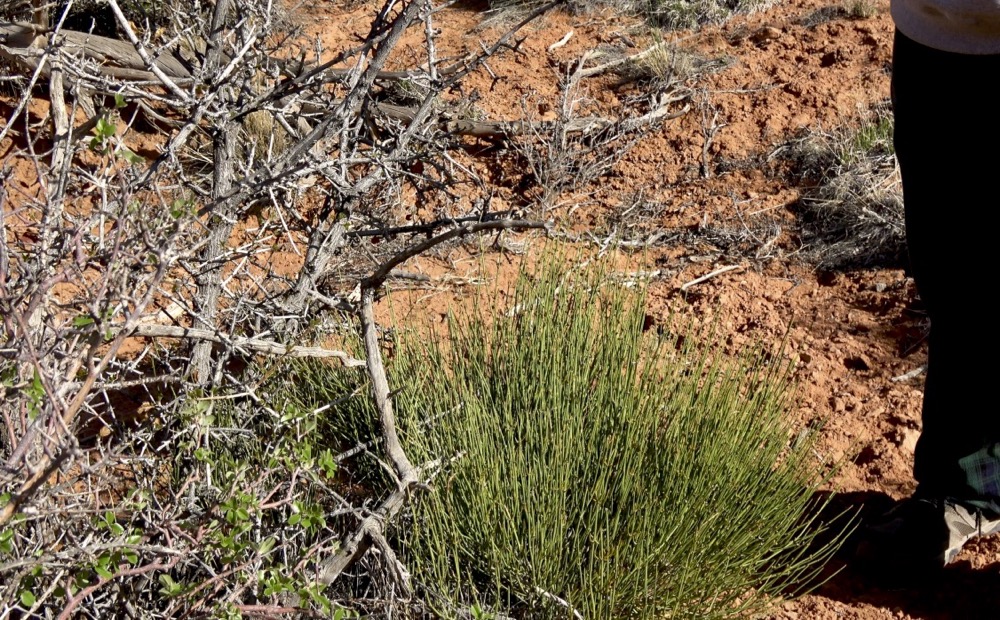
Green Ephedra (Ephedra viridis) is a fleshy shrub that grows best in desert habitat types especially sandy soils derived from sandstone exposures known as slickrock where plants in general are scarce due to extremes of heat, dryness and limited soil fertility.

Commonly known as Mormon tea, it has been used by native people and early settlers (who learned of it from their indigenous neighbors) as a mild stimulant. It contains no caffeine so people with any aversions to coffee or black tea can feel it’s benefits without side-effects.

As an antiseptic its been used for centuries to treat syphilis and urinary tract infections as well as a topical dressing for wounds.  It’s extremely high levels of calcium and phosphorus make the fresh tea useful for mood enhancement as well as helping osteoporosis, many skin conditions and allergic reactions.

Navajos, Paiutes and other tribes have used the mature crushed stems for a yellowish green dye.

Today it is a favorite among many tea drinkers for its subtle but distinctive character and pleasant energetic effect.

Green Ephedra2021-06-17T20:00:58+00:00

Big Sagebrush

2026-02-06T05:15:55+00:00

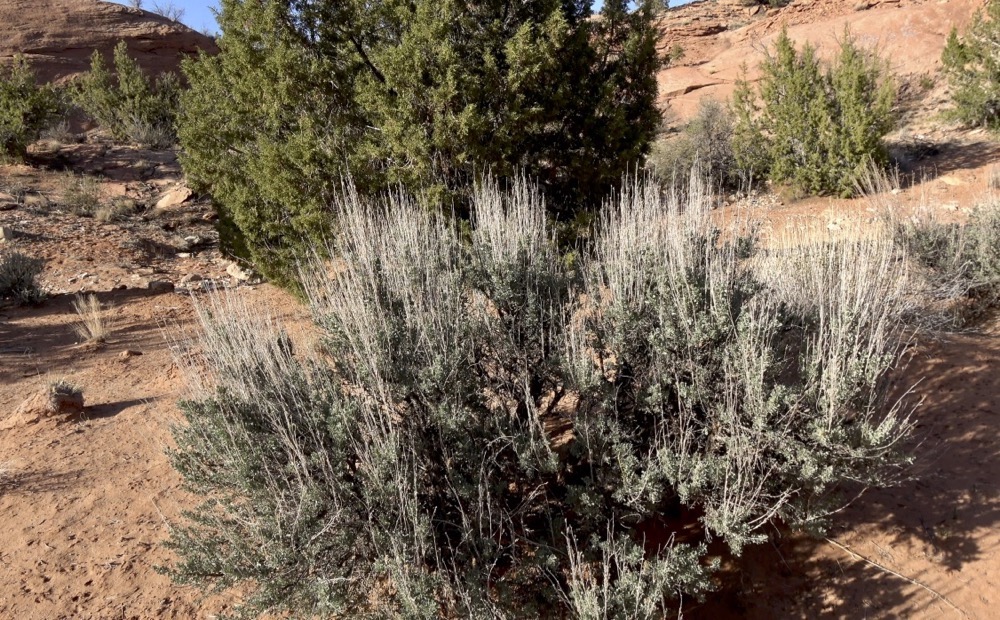
Big Sagebrush (Artemisia tridentata) is a predominant shrub of the West and an important plant for both wildlife and Native peoples. It provids a protective habitat for elk and other wildlife when giving birth. Certain specimens of the big sagebrush species provide female elk with an oil essential for to the birthing process.

There are three subspecies of big sagebrush each with their unique benefits for wildlife and chemical qualities which make them important traditional medicinal plants.

According to Navajo geobotanist Arnold Clifford, the leaves of Big Sagebrush are boiled to use as an inhalant or drank as a tea to treat colds. It can be used as a dye plant giving a greenish-grey color. It is also very good as a food for sheep and goats, imparting a unique sage flavor to the meat.

Bundles of another species of sage are burned as a smug used as a blessing and an effective fumigant to disinfect your environment.

A subspecies of big sagebrush known as tree sage grows in pure blow sand, which is a deep sand dune. Tree sage was used by the Western Shoshone to make dresses from wide strips of its bark. While gathering some of this bark, John Mionczynski discusses this unique plant and its habitat.

Harvesting big sagebrush occurs once a year in the late spring/early summer. Darrah Goggles speaks of the importance of being spiritually rooted for this gathering. Plants are treated with respect and harvested through cuttings, leaving the roots intact. Only take what is needed and respect the spirit of each plant.  All plants have spirit and should be treated accordingly.

Big Sagebrush2026-02-06T05:15:55+00:00

Pale Wolfberry

2021-06-17T20:04:09+00:00

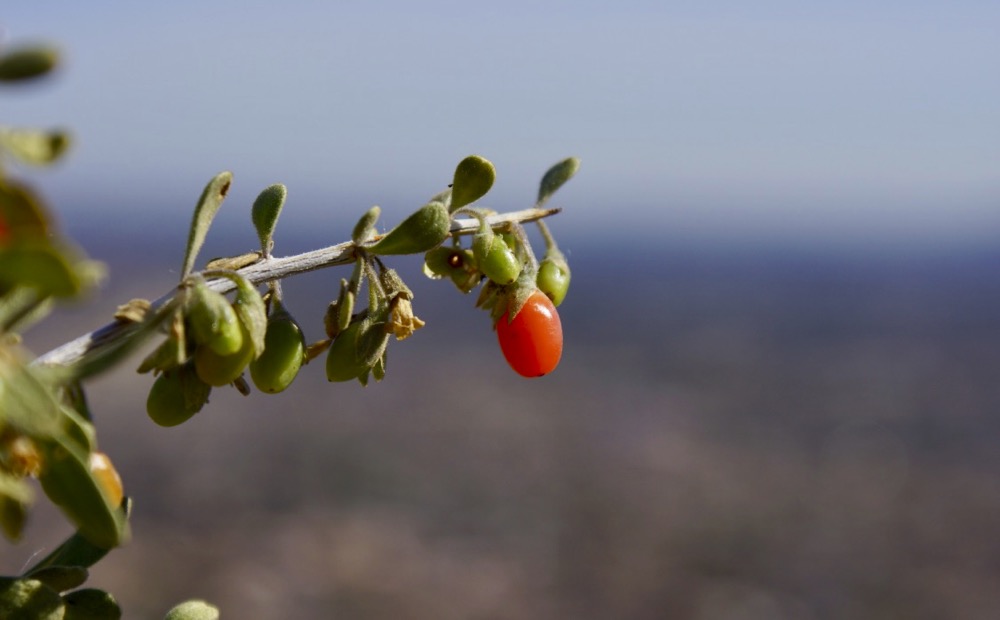
Pale Wolfberry (Lycium pallium) is a sand desert shrub. The Navajo know this plant as ‘Haash Che dah’ which translates as ‘plant of the Holy People’.  The orange berries from this plant are mixed with clay and made into a pudding which is eaten during the Vigil of the God’s part of the Night Way Chant ceremony.

The plants are often found in colonies which suggests that they were transplanted by ancient peoples.

Pale Wolfberry2021-06-17T20:04:09+00:00

Nodding Buckwheat

2023-10-17T21:29:41+00:00

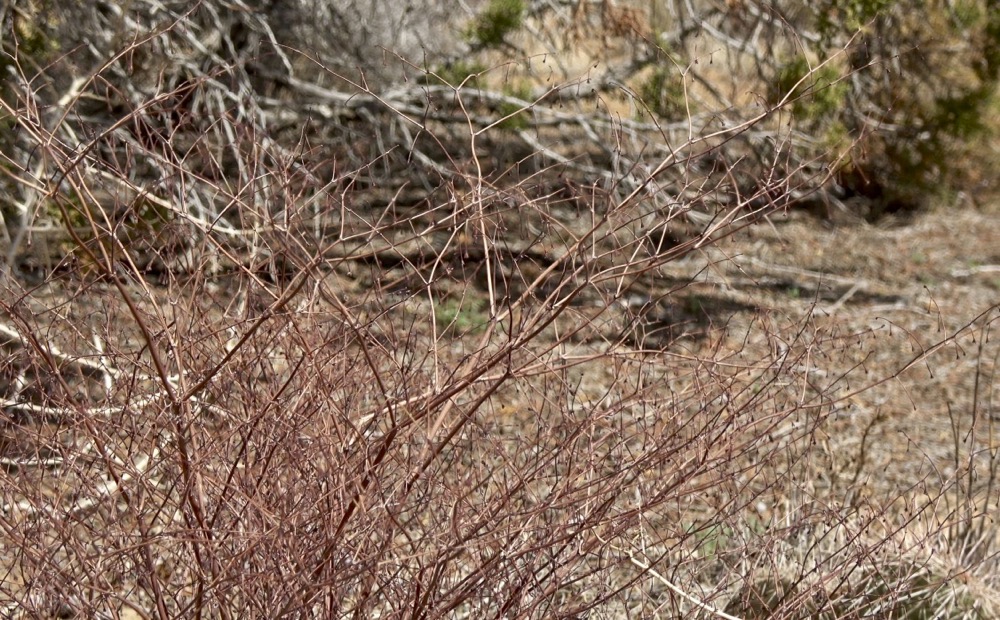
Nodding Buckwheat (Eriogonum cernuum) is one of over 450 species of Eriogonum found in North America. Wild buckwheat is a different genus than the agriculturally cultivated European buckwheat and does not produce an edible grain. Wild buckwheats are none the less very important plants for Native American’s of the American Southwest.  Some are important medicinal plants, such as Eriogonum elatum. Other Eriogonums are part of traditional tobacco mixtures.

The Eriogonum cernuum is an annual flowing variety. The hanging down flowers are arranged in stem clusters known as inflorescence with small white or pink-tinged flowers. This plant is a powerful ceremonial plant used against ‘the evil way ’-  providing protection to its users.

In this next video, Grant Bulltail tells how the Crow used Wild Buckwheat, known to them as chíischia. Physically, it is used to clean and promote hair growth. For endurance, one eats a bit of the blossom or rubs it on legs, feet, and chest.

Nodding Buckwheat2023-10-17T21:29:41+00:00

Indian Rice Grass

2021-06-17T20:05:46+00:00

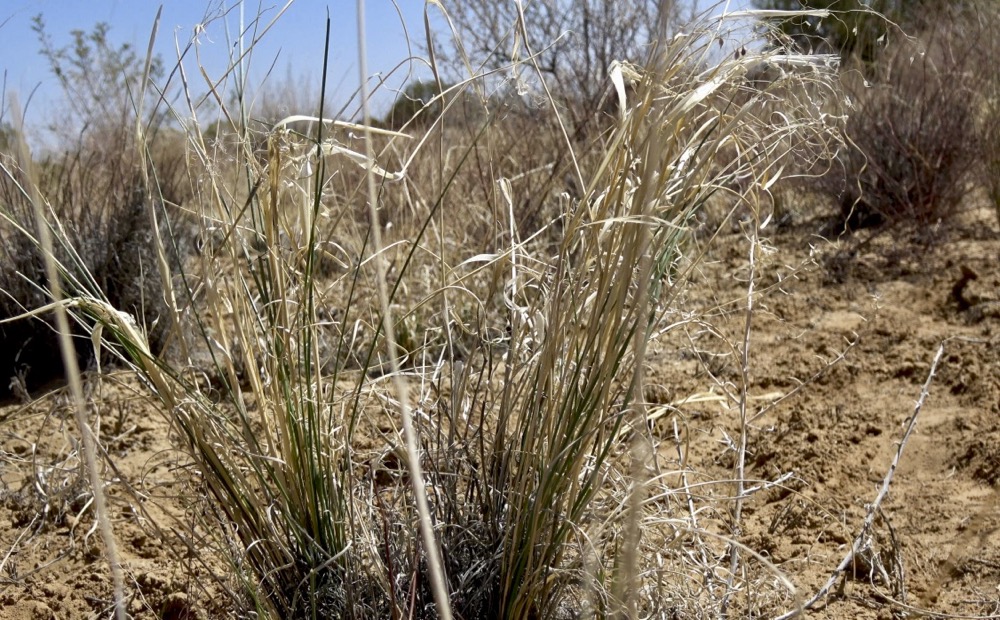
Indian Rice Grass (Oryzopsis hymenoides) is a common grass of the American West. It’s small seeds are parched before grinding into flour. The curling ends of its leaves are a distinctive characteristic. Most of the Desert Southwest grasses have edible seeds, but Indian Rice Grass is the dominant grass growing with sagebrush.

Indian Rice Grass2021-06-17T20:05:46+00:00

San Juan Onion

2021-06-17T20:08:33+00:00

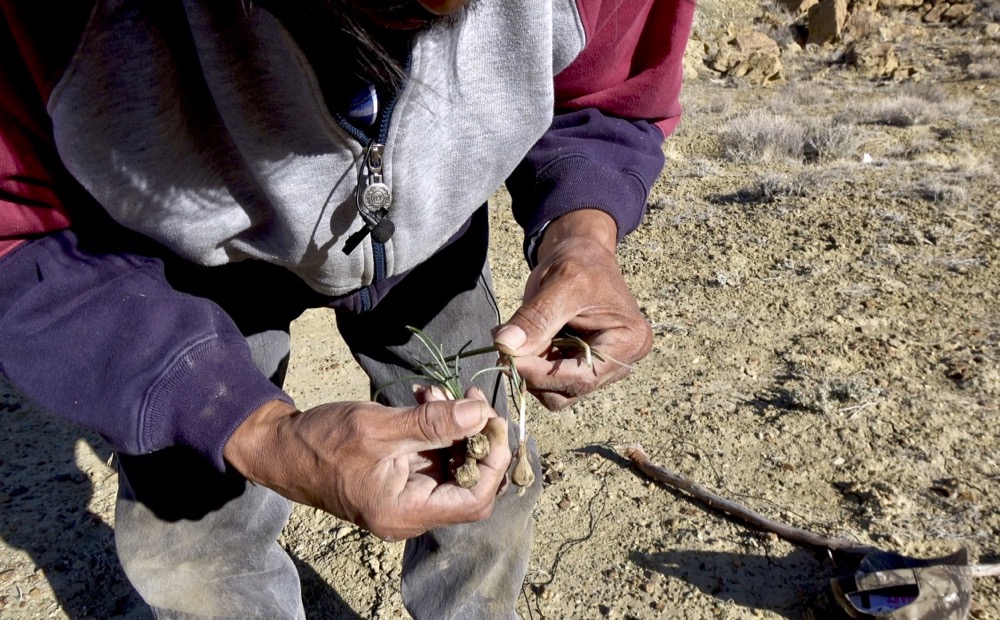
San Juan Onion (Allium macropetalum) is member of the onion family which is easily recognizable by its smell. Many plants have similar visual characteristics and are sometimes difficult to identify. The first specimen in this video is actually a Calochortus, which can be a toxic. Luckily the Allium has its distinctive onion smell!

The wild onion is an important food which is used in the same ways as its grocery story relative; eaten raw or as a cooked additive to soups and stews.

San Juan Onion2021-06-17T20:08:33+00:00

Bulbous Biscuitroot

2021-06-17T20:10:18+00:00

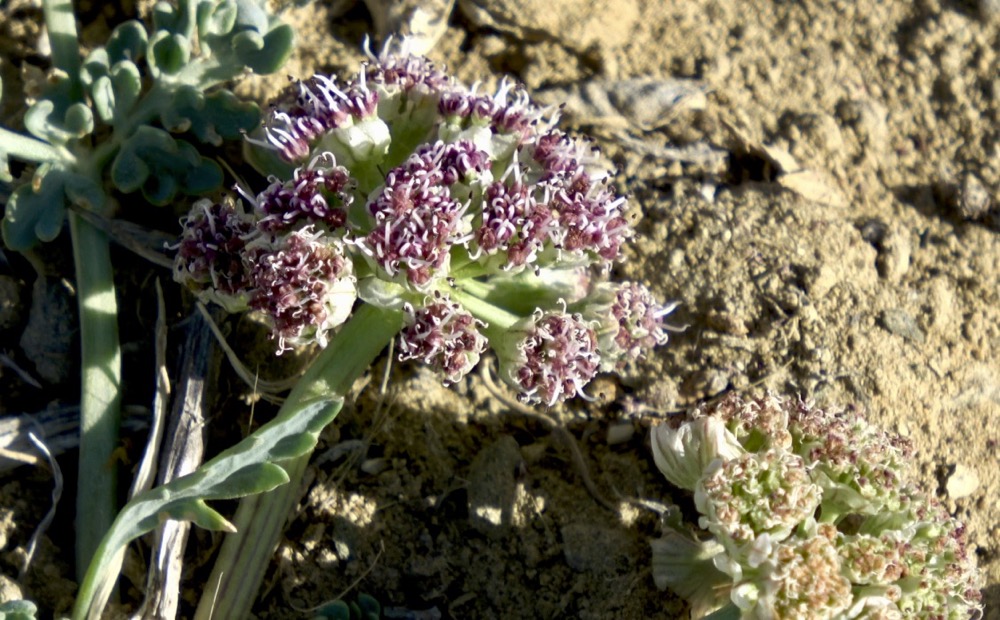
Bulbous Biscuitroot (Cymopterus bulbosa) is a member of the parsley family. It is one of several varieties that are found throughout the Desert Southwest.  The Cymopterus bulbosa is notable for its pale green leaves with a blue tinge. In early spring, the purple/pink flowers emerge through white papery bracts. Other Cymopterus species have yellow flowers.

Biscuitroot is a multi-use plant.  As a spice, before it flowers, the leaves can be dried and crumbled to be used as a spice like parsley. When the flowers fruit, the winged fruit can be eaten as a medicine. The roots are edible – eaten fresh like a carrot or dried to be ground into flour. The bark of the root can be striped and boiled to make a yellow dye.

Widely distributed and often found in large quantities, biscuitroot was a widely used food source for many Native peoples.

Bulbous Biscuitroot2021-06-17T20:10:18+00:00
Go to Top